Home massage is much more than just a wellness service – it’s an experience that brings relaxation directly to your own space, without having to worry about commuting, long hours waiting, or disruptions to your schedule. Everything happens where you feel most comfortable: in your own home.
Each session is tailored to your specific needs, guided by an experienced therapist who knows how to help you truly relax. To make the most of this experience and achieve the best possible results, some basic preparation – both for your physical state and your space – can make all the difference.
It’s nothing complicated. With a few targeted choices, you can create the ideal conditions that will significantly enhance the quality of your session. This allows your therapist to work with safety and precision while you enjoy the massage from start to finish, feeling genuine relief by the end.
Below, you’ll find 5 practical preparation steps to ensure your home massage session is comfortable, safe, and truly effective, from the first contact right through to after the treatment ends.
1. The Day Before Your Session
Listen to Your Body.
Massage is a treatment that requires you to be in good condition to fully enjoy it. If you have a fever, feel significantly unwell, have a serious cold, acute pain, or are experiencing a flare-up of a chronic condition, contact us early to reschedule your session for a day when you’re feeling better.
When you’re unwell and your body is under pressure, your response to massage may be limited. In some cases, stimulating the tissues and circulatory system can even worsen fatigue or symptoms, putting additional strain on your body.
Share Important Health Information.
Inform your therapist about anything that might affect your session: any chronic conditions, varicose veins, hernias/disc problems, pregnancy, recent surgeries, injuries or bruising, as well as allergies to oils or cosmetics.
This information isn’t just for formality – it helps your therapist select the safest technique, the right pressure intensity, and adapt the session to your specific circumstances.
Define Your Goal.
What are you looking for from this session? Relaxation? Lymphatic drainage? Focus on back and neck? Recovery after intense exercise? Or perhaps support during pregnancy?
The clearer your goal, the more targeted and effective your session will be. A brief conversation with your therapist is all it takes to create the right plan together.
2. On the Day of Your Massage
Avoid Heavy Meals.
Having a full stomach during massage isn’t a pleasant feeling, as it can cause discomfort or even nausea during the session.
Choose a light meal about 1.5 to 2 hours before your session, so you feel comfortable but not hungry.
Avoid Alcohol and Excessive Strain.
Alcohol and massage don’t mix well. It’s best to avoid consuming it on the same day (and ideally from the previous evening).
Also, if you usually work out, try not to do very intense training just before your session, instead let your body ease up.
A Quick Shower is Ideal.
Clean skin, without heavy creams or strong fragrances, makes the session more comfortable for both you and your therapist.
It also facilitates the application of oils and products that will be used during the session.
Wear Comfortable Clothes.
Choose clothes that come off easily and make you feel relaxed after your session.
In winter, keep warm socks and an extra cardigan or shirt nearby – you’ll appreciate them at the end of your session.
Remove Your Jewelry.
Rings, watches, bracelets, chains, and large earrings are better removed before the session begins.
This way you’ll feel freer and there will be no risk of them bothering you or causing injury during your massage.
3. How to Prepare Your Space
Choose a Quiet Room.
Massage works best when you can disconnect from your external environment.
Choose a room where there won’t be interruptions for a set period of time, turn off the TV, put your phone on silent mode, and make sure there’s no constant movement in the space.
Clear Enough Space.
The portable massage table needs adequate surface area, as well as space around it for the therapist to move comfortably and execute techniques with precision.
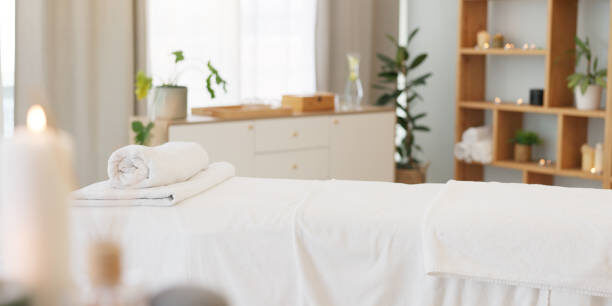
Clear approximately two square meters in the space where the session will take place, ideally before your therapist arrives.
Adjust the Temperature.
The room should be warm and stable, especially in winter. During the massage, you’ll be still for quite some time, so even a light draft can be bothersome.
Air out the room for a few minutes before the session begins, but close the windows shut when it’s time to begin.
Lower the Lights.
Warm, soft lighting creates an atmosphere that helps you leave the day’s thoughts behind.
Avoid harsh overhead lighting and instead opt for a floor lamp, a dim light, or even a candle you enjoy. A welcoming and serene atmosphere is everything for a session’s effectiveness.
Take Care of Pets and Children.
Pets are wonderful, but during the massage it’s better if they’re in another room.
The same goes for children (if they’re at home) – agree beforehand that for one hour you’ll need absolute quiet without unnecessary interruptions.
4. What to Have Ready with You
Sheets or Towels (if not provided).
Therapists usually bring their own materials, but if needed, have available 1–2 large sheets or large towels and 1–2 smaller ones for the head.
Support Pillow or Bolster.
If you have sensitivity in your neck, lower back, or knees, a pillow or bolster can work wonders for your comfort. It’s worth mentioning it to your therapist – they’ll be more than happy to use it for your own comfort.
Water.
A glass of water after your session isn’t just a good idea – it’s almost essential for your body to recover properly.
Massage activates the lymphatic system and helps eliminate toxins, and water supports this process.
5. During and After Your Session
Communicate Freely.
The quality of massage increases dramatically when there’s collaboration. If something hurts, if you’re cold, if you want more or less pressure, remember you have every right to mention it.
Your therapist is there for you, and your feedback helps them adjust the session precisely to your needs.
Let Your Body Relax.
Put your phone aside, close your eyes, and breathe deeply and slowly. The less tension you “hold onto,” the more easily your body responds to the massage.
Stand Up Gradually.
After the session ends, don’t rush to get up. It’s normal to feel sleepy or a sense of light dizziness. Sit on the edge of the table for 1–2 minutes, breathe calmly, and then stand at your own pace.
Protect Your Body.
For the next 1–2 hours, try to avoid heavy meals, alcohol, hot showers or saunas, and intense exercise.
Your body has just gone through a therapeutic process – let it complete its work. Therefore, rest, hydrate, and enjoy the sense of wellbeing that will accompany you for the next hours and days.
Book Your Next Appointment
If you want to experience an authentic and fully professional home massage from specialized therapists, we’re here for you! You can book your appointment easily, either through the booking form on our website or by phone.
We look forward to sharing with you a moment of genuine relaxation and renewal – in your own space, at your own pace.


![Γιατί το Μυοχαλαρωτικό Μασάζ Μετά τη Γυμναστική Είναι Σημαντικό - Professional Massage Athens [BLOG]](https://professionalmassageathens.gr/wp-content/uploads/2026/01/WhatsApp-Image-2026-01-14-at-16.21.57-110x80.jpeg)